
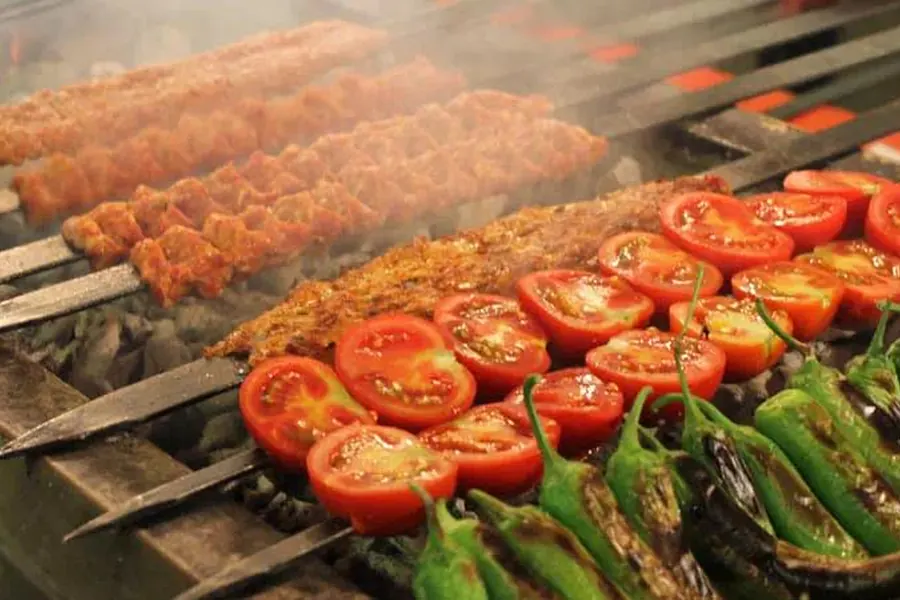
Turkish cuisine draws on a huge range of ingredients and on centuries of Ottoman palace cooking, village traditions and regional specialities. Kebabs are only the start: there are olive oil vegetable dishes, slow-cooked stews, stuffed vegetables, pastries, soups and some of the best-loved sweets in the world. This guide covers the most popular Turkish dishes, what makes each one different, and where to try them in Istanbul.
Regional Turkish Cuisine at a Glance
Turkey is divided into seven geographical regions, and each has its own kitchen habits. Broadly, the Aegean and Mediterranean coasts are known for olive oil dishes and seafood, the east and south-east for meat and kebabs, and Central Anatolia for hearty dishes that combine meat, grains and vegetables.
- Aegean: artichokes cooked in olive oil, samphire (deniz börülcesi), black-eyed beans, tarhana soup, stuffed courgette flowers, vine leaves stuffed with rice, seafood and zerde, a saffron rice pudding.
- Black Sea: steamed anchovies (hamsi buğulama), anchovy pilaf (hamsili pilav), Laz böreği pastry, mıhlama (a cheesy cornmeal dish), Akçaabat meatballs, black cabbage soup and siron.
- Central Anatolia: meat stews, mantı (Turkish dumplings), arabaşı and yoghurt soups, meat pide and Ankara tava.
- Eastern and South-Eastern Anatolia: onion kebab, tray kebab (tepsi kebabı), katmer, stuffed vegetables, çiğ köfte, beyran soup, borani and Ali Nazik.
In Istanbul you can find dishes from every one of these regions, because the city has drawn people from all over the country.
The Most Popular Turkish Dishes to Try
1. Adana and Urfa kebab
There are dozens of kebab styles in Turkey, but Adana and Urfa are the two you will see on almost every grill menu. Both are made from minced lamb mixed with tail fat and spices, pressed by hand onto a wide skewer and grilled over charcoal. They are served with grilled peppers, tomatoes and flatbread.
The difference is the heat: Adana kebab contains hot red pepper, while Urfa kebab is mild.

2. İçli köfte (stuffed meatballs)
İçli köfte is one of the most elegant dishes on a Turkish table, made with small variations in almost every region. A shell of fine bulgur kneaded with minced meat, a little semolina, egg and spices is shaped around a filling of spiced minced meat and walnuts, then fried or boiled.
The skill is in the kneading and in shaping a shell thin enough to be crisp but strong enough to hold the filling.

3. Mantı (Turkish dumplings)
Mantı are tiny dumplings filled with spiced minced meat, either boiled or baked. Thin dough is cut into small squares, a little filling is placed in the middle and the corners are pinched together. Some cooks make them so small that dozens fit on a single spoon.
They are served with garlic yoghurt and finished with butter melted with red pepper flakes.

4. Tandır lamb
A tandır is a traditional pit oven dug into the ground, often 1 to 1.5 metres deep. A wood fire is burnt down at the bottom, then the lamb is hung inside and cooked slowly for hours until the meat falls off the bone. Recipes differ from region to region, but the result is always very tender.

5. Sarma (stuffed vine leaves)
Vine leaves wrapped around a filling are among the most carefully prepared dishes in Turkish cooking. On the Aegean coast they are usually filled with rice, herbs and spices and cooked in olive oil, then served cold. In the east the filling often includes minced meat and can be flavoured with pomegranate molasses.

6. Kağıt kebabı (paper kebab)
Paper kebab comes from the Antakya (Hatay) region. Lean minced lamb is kneaded with onion, tomato, pepper and spices, spread on greaseproof paper, placed on a tray and baked in the oven.

7. İskender kebab
İskender kebab is native to Bursa and is named after İskender Efendi, the cook credited with creating it. Thin slices of meat from a vertical spit are laid over pieces of pide bread, covered in tomato sauce and served with yoghurt. The finishing touch is hot melted butter poured over the top at the table.

8. Çiğ köfte
Çiğ köfte is a spicy mix of fine bulgur, tomato paste, pepper paste, onion, isot (Urfa chilli flakes) and cumin, kneaded for a long time and eaten wrapped in lettuce or flatbread with lemon and herbs. Traditionally it contained raw meat, but the versions sold in shops and restaurants today are meat-free. It is often drunk with ayran.

9. Cağ kebabı
Cağ kebabı is the speciality of Erzurum in eastern Turkey. Boneless lamb is marinated, stacked on a horizontal spit and turned slowly in front of a wood fire. The cooked outer layer is sliced onto smaller skewers and eaten with lavash bread.

10. Döner
Döner is the best-known Turkish street food. Meat is stacked on a large vertical spit, cooked as it turns and sliced into bread, a wrap (dürüm) or onto a plate with rice. You can choose beef or lamb (et döner) or chicken (tavuk döner). Read more in our guide to the best Istanbul street foods.

11. Baklava
Baklava is the sweet almost every visitor wants to try. Many thin layers of pastry are filled with pistachios or walnuts, baked and then soaked in syrup. It is served plain, with kaymak (clotted cream) or with ice cream. Gaziantep pistachio baklava is the most famous. For more sweets, see our guide to Turkish desserts and sweets.

12. Turkish coffee
Turkish coffee is brewed slowly in a small pot called a cezve and served unfiltered, so the grounds settle at the bottom of the cup. Packets of freshly ground coffee also make a popular gift. A well-known place to buy it is Kurukahveci Mehmet Efendi, just behind the Spice Bazaar in Eminönü. Tea, ayran, boza and other drinks are covered in our guide to traditional Turkish drinks.

Where to Eat Turkish Food in Istanbul
These long-standing places are good starting points. Restaurants change, so check that they are open before you go. Our guide on where to eat in Istanbul has more ideas by neighbourhood.
Kebab: Hamdi Restaurant, Eminönü
Hamdi serves many varieties of kebab, including a pistachio kebab, with views over the Golden Horn towards Galata, the Bosphorus and the Sultanahmet skyline. It is in Eminönü, close to the Spice Bazaar.
Lahmacun: Borsam Taşfırın, Kadıköy
Lahmacun is often called a "Turkish pizza", but it has little in common with the Italian dish. A thin, crisp round of dough is topped with seasoned minced meat, then squeezed with lemon, filled with parsley and rolled up. Borsam Taşfırın on the Asian side in Kadıköy is known for its stone-oven lahmacun.
Döner: Sedef Döner, Sultanahmet
Sedef Döner is on Divanyolu Avenue, within walking distance of Sultanahmet Square, which makes it a handy lunch stop between sights.
İskender: Şavak Usta, Aksaray
For Bursa-style İskender and other kebabs, Şavak Usta on Sofular Street in Aksaray is a local favourite.
More local favourites
- Sultanahmet köftesi: the historic meatball restaurants next to the Sultanahmet tram stop serve the grilled meatballs named after the district.
- Ali Baba Kuru Fasulye: opposite the Süleymaniye Mosque, behind Beyazıt Square. Order kuru fasulye (white bean stew) with rice, cacık and pickles. Prices are reasonable.
- Hatay Medeniyet Sofrası: near Taksim Square, a good choice for a full feast of meat dishes from the Hatay region.
- Karaköy Güllüoğlu: one of the city's best-known baklava shops, in Karaköy. Besides baklava, try şöbiyet, burma kadayıf and the milk-based sweets.
Food Tours and Dinner on the Bosphorus
If you would rather taste your way through the city with a guide, our Istanbul food tour takes you to local favourites for kebabs, meze, street food and sweets. For a special evening, you can also book a private dinner cruise on a yacht and eat with the palaces and bridges of the Bosphorus lit up around you.
Travelling further? See our guides to the best restaurants in Cappadocia and Ephesus, or our list of the top things to eat in Istanbul.
Frequently asked questions
What is the most famous Turkish dish?
Kebab is the best known, especially döner, Adana and İskender kebab. Baklava is the most famous Turkish sweet.
What is the difference between Adana and Urfa kebab?
Both are hand-minced lamb kebabs grilled on a wide skewer. Adana kebab is spicy because it contains hot red pepper, while Urfa kebab is mild.
Is Turkish food spicy?
Most Turkish food is well seasoned rather than hot. Dishes from the south-east, such as Adana kebab and çiğ köfte, can be spicy, and chilli flakes are usually served on the side.
Are there vegetarian Turkish dishes?
Yes. Olive oil vegetable dishes, stuffed vine leaves with rice, lentil soup, meze and the meat-free çiğ köfte sold today are all good vegetarian choices.
What is lahmacun?
Lahmacun is a thin, crisp flatbread topped with spiced minced meat. It is eaten with lemon juice and parsley, rolled up by hand.
Dinner on the Bosphorus
Enjoy Turkish mezes and a chef's dinner on a private yacht, with the palaces and bridges lit up around you.