
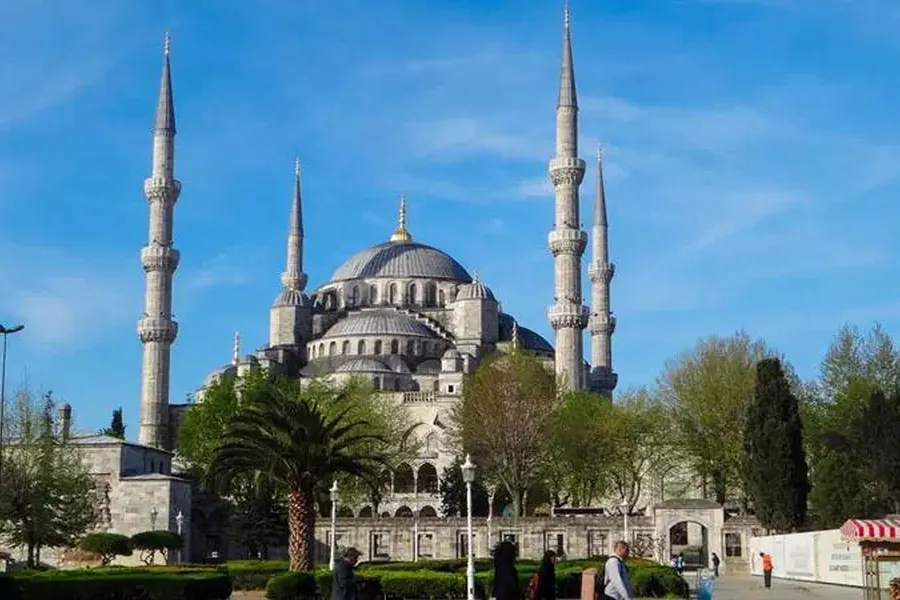
Update 2026: Hagia Sophia has been a mosque again since July 2020. Since 15 January 2024, foreign visitors enter through a separate route to the upper gallery with the Byzantine mosaics, for a fee of €25; the ground floor is reserved for prayer. On Fridays the visitor route closes around the noon prayer.
Hagia Sophia in Istanbul has stood over Sultanahmet for almost 1,500 years. Built as the great cathedral of the Byzantine Empire, it became an imperial mosque after 1453, a museum in the twentieth century and, since July 2020, a working mosque again. Few buildings anywhere carry so much history under one roof.
This guide covers its history, what to see inside and how a visit works today. For the stories and legends behind the building, read the secrets of the Hagia Sophia.

History of Hagia Sophia
A Byzantine cathedral
The building you see today is the third church on the site. The first was built in the fourth century and the second under Theodosius II; both were destroyed by fire. After the Nika riots of 532, Emperor Justinian ordered a new church on a scale never seen before. Designed by Anthemius of Tralles and Isidore of Miletus, it was completed in 537.
Its huge dome, which seems to float on a ring of windows, made it the largest church in the Christian world for nearly a thousand years. Hagia Sophia served as a church for 916 years.
An Ottoman mosque
When Sultan Mehmed II (Fatih Sultan Mehmed) conquered Constantinople in 1453, he chose Hagia Sophia for the first Friday prayer in the city and converted it into a mosque. The first minaret was added in his reign and another under Bayezid II; the great architect Mimar Sinan later added two more minarets and strengthened the structure with buttresses.
The Ottomans also added the mihrab (prayer niche), the minbar (pulpit), the sultan's lodge and the huge roundels with the names of God, the Prophet Muhammad and the first caliphs.
Museum and mosque again
In 1934 the building was turned into a museum and opened to visitors in 1935. In July 2020 it was reconverted into a mosque, under its official name Ayasofya-i Kebir Cami-i Şerifi, and it is open for prayer once more.

What to see in Hagia Sophia
- The main dome and the vast central space, the reason the building has been admired for centuries.
- Byzantine mosaics in gold, silver and coloured stone, showing Christ, the Virgin Mary, archangels and emperors. The Virgin and Child sits in the apse, and the famous Deesis mosaic is in the upper gallery.
- The marble columns, many reused from older buildings, and the marble panels of the walls.
- Ottoman additions: the mihrab, the minbar and the great calligraphic roundels.
- The tombs of Ottoman sultans and members of the imperial family in the garden, among them Selim II and Murad III.
With its gates, tombs and additions from both empires, Hagia Sophia still shows its former glory. Some mosaics on the ground floor may be covered by curtains or lighting during prayer.

Visiting Hagia Sophia as a mosque
Since 15 January 2024, foreign visitors use a separate entrance and route to the upper gallery, where they can see the interior and the mosaics from above. Entry for foreign visitors is ticketed (EUR 25 at the time of writing). The ground floor is reserved for prayer. Entrance fees and opening hours change often, so check the current details on the official website before you visit.
Tips for your visit
- Dress modestly: cover shoulders and knees, and women should cover their hair. Scarves are usually available at the entrance.
- Hagia Sophia closes to visitors during prayer times, and for longer on Fridays around the midday prayer. Plan your visit around them.
- Go early in the morning or later in the afternoon to avoid the longest queues.
- Combine it with the Blue Mosque opposite, the Basilica Cistern a few minutes' walk away and the Hippodrome.

How to get to Hagia Sophia
Hagia Sophia is on Sultanahmet Square, between the Blue Mosque and Topkapı Palace. The T1 tram stops at Sultanahmet, a two-minute walk away. If your hotel is in the old city, you can walk or take the tram directly; from other districts, connect to the T1 line at Kabataş, Karaköy or Eminönü.
To see Hagia Sophia with the history explained and the day planned around prayer times, join our guided Istanbul old city tour.

Frequently asked questions
Is Hagia Sophia a mosque or a museum?
Hagia Sophia has been a mosque again since July 2020. It was a museum from 1935 until then, and visitors can still go inside outside prayer times.
Can tourists visit Hagia Sophia?
Yes. Since January 2024 foreign visitors use a separate, ticketed route to the upper gallery, while the ground floor is reserved for prayer.
What should I wear to visit Hagia Sophia?
Cover your shoulders and knees, and women should cover their hair. Shoes are removed in prayer areas.
When was Hagia Sophia built?
The present building was commissioned by Emperor Justinian and completed in 537, on the site of two earlier churches.
Is Hagia Sophia open on Fridays?
It is open, but it closes to visitors during prayer times, and the Friday midday prayer means a longer closure. Plan your visit for another time if you can.
End your sightseeing day on the water
After the old city, see the palaces and mansions from the Bosphorus on a private sunset yacht cruise, only for your group.
More from our Istanbul guide
- Little Hagia Sophia Mosque in Istanbul: History and Visitor GuideIstanbul sights
- Aya Irini Church (Hagia Irene) in Istanbul: History and Visitor GuideIstanbul sights
- Chora Church (Kariye Mosque) in Istanbul: History and Visitor GuideIstanbul sights
- Galata Tower in Istanbul: History, Legends and Visitor GuideIstanbul sights