
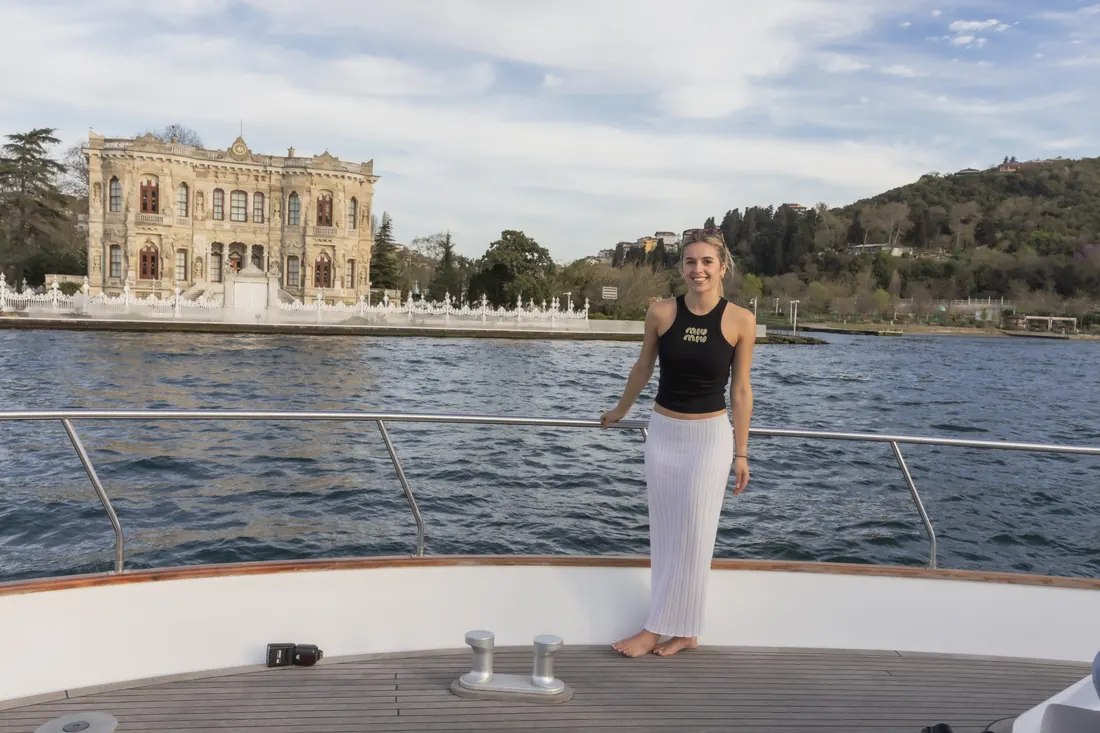
Istanbul was an imperial capital for more than 1,500 years, and its palaces tell that story better than almost anything else. The Byzantine palaces have mostly vanished, but the Ottoman palaces and pavilions survive, many of them along the Bosphorus. This guide covers the palaces in Istanbul you can visit, what makes each one special and how to get there.
Topkapi Palace: the Ottoman court for four centuries
Sultan Mehmed II, the conqueror of Constantinople, began building Topkapi Palace in the years after 1453. For around 400 years it was the home of the sultans and the administrative centre of the empire. The palace grounds were once far larger than today; the museum area covers only part of the original site, on the tip of the historic peninsula above the Bosphorus and the Golden Horn.
When the sultans moved to Dolmabahçe and later Yıldız in the 19th century, Topkapi was gradually left empty. It became a museum in 1924 and is now one of the most visited sights in Istanbul. Highlights include the Imperial Council chamber, the Treasury, the Harem and the pavilions of the fourth courtyard. The Byzantine church of Hagia Irene stands in the first courtyard. Read more in our guides to Topkapi Palace and its courtyards.


How to get to Topkapi Palace
The palace is behind Hagia Sophia in Sultanahmet, in the Fatih district. Take the T1 tram to Sultanahmet or Gülhane and walk five minutes. If your hotel is in the old city, you can walk there.
Dolmabahçe Palace: the sultans on the Bosphorus
Built for Sultan Abdülmecid and completed in 1856, Dolmabahçe Palace stands right on the European shore of the Bosphorus. After it opened, the sultans gradually left Topkapi and lived here instead. With around 285 rooms and more than 40 halls, it is one of the largest palaces in Turkey, decorated in a mix of European styles with crystal chandeliers, silk carpets and original furniture.
Dolmabahçe also played a part in the history of the Republic: Mustafa Kemal Atatürk stayed here on his visits to Istanbul and died in the palace on 10 November 1938. You can see his room on a visit. Find out more in our guide to Dolmabahçe Palace, or combine a visit with time on the water on our Dolmabahçe Palace tour and Bosphorus cruise.


How to get to Dolmabahçe Palace
The palace is in Beşiktaş. Take the T1 tram to its last stop, Kabataş, and walk about 10 minutes along the shore.
Yıldız Palace and the Şale Pavilion
Yıldız Palace is not a single building but a group of pavilions and gardens on the wooded hillside above Beşiktaş. It grew from a pavilion that Sultan Selim III built for his mother, Mihrişah Sultan, in the late 18th century. Sultan Abdülhamid II made it his residence and ruled from here for 33 years, preferring its secluded grounds, as he lived in constant fear of conspiracy.
The complex includes one of the few surviving palace theatres and the carpentry workshop of Abdülhamid II, who was a skilled woodworker. The Şale Pavilion in Yıldız Park was used to host foreign guests, including the German emperor. Over the years the complex has housed the Yıldız Palace Museum (opened in 1994), the palace theatre and Performing Arts Museum, and a city museum; check which sections are open before you go.


How to get to Yıldız Palace
Yıldız is in Beşiktaş, uphill from the Çırağan shore road. Walk up through Yıldız Park or take a taxi from Beşiktaş.
Beylerbeyi Palace: summer palace on the Asian shore
Beylerbeyi Palace was built for Sultan Abdülaziz and completed in 1865. It sits on the Asian shore beside the first Bosphorus bridge and was used as a summer residence and as a guest palace for visiting royalty and heads of state.
The palace has around two dozen rooms and six halls, including a hall with a marble pool, the Harem and Selamlık sections and richly decorated reception rooms. In the terraced gardens you will find the Marble Pavilion and the Yellow Pavilion, said to date from the time of Mahmud II, and the Stable Pavilion built for the sultan's horses. After he was deposed, Abdülhamid II was held here until his death in 1918. Read more about Beylerbeyi Palace.


How to get to Beylerbeyi Palace
The palace is in the Üsküdar district, about 3.5 km north of Üsküdar pier along the coast road. Take a bus or taxi from Üsküdar, which you can reach by ferry or Marmaray train from the European side.
Çırağan Palace: from imperial residence to hotel
Çırağan Palace stands on the European shore between Beşiktaş and Ortaköy. Earlier palaces stood on this site, known in the 17th century as the Kazancıoğlu Gardens. The name comes from the torch-lit (çırağan) festivals held here in the 18th century. The present stone palace was built for Sultan Abdülaziz by the architect Sarkis Balyan and completed in 1871.
Sultan Murad V lived here in confinement for many years after he was deposed. In 1909 the palace became the seat of the Ottoman parliament, but a fire in 1910 left it a ruin for decades. It was restored in the late 20th century and is now part of a luxury hotel, used for weddings, receptions and events. See our article on Çırağan Palace.


How to get to Çırağan Palace
The palace is on Çırağan Street in Beşiktaş. Buses run along the coast road from Kabataş and Beşiktaş towards Ortaköy.
Smaller palaces and pavilions worth a visit
- Küçüksu Pavilion: a small, elaborately decorated rest pavilion built for Sultan Abdülmecid on the Asian shore, near Anadolu Hisarı.
- Ibrahim Pasha Palace: the 16th-century palace of Suleiman the Magnificent's grand vizier on the Hippodrome, now the Museum of Turkish and Islamic Arts. Read our guide to the Pargali Ibrahim Pasha Palace.
Entrance fees and opening hours change, and some palaces close one or two days a week, so check them on the official website before you visit.
Seeing the palaces in Istanbul from the Bosphorus
Dolmabahçe, Çırağan, Beylerbeyi and Küçüksu were all built on the water, and they were designed to be seen from it. A cruise is the easiest way to see them together, along with the wooden yalı mansions of the old Ottoman families. Take a Bosphorus sunset cruise for golden-hour views of the facades, or book a private Bosphorus mansions and palaces cruise with commentary.


Frequently asked questions
Which palace in Istanbul should I visit first?
Most first-time visitors start with Topkapi Palace in Sultanahmet, the Ottoman court for around 400 years, and then visit Dolmabahçe Palace on the Bosphorus.
What is the difference between Topkapi and Dolmabahçe Palace?
Topkapi is the older palace, begun after 1453, with courtyards and pavilions in classical Ottoman style. Dolmabahçe, completed in 1856, is a single European-style palace on the Bosphorus where the last sultans lived.
Can you see the Bosphorus palaces from a boat?
Yes. Dolmabahçe, Çırağan, Beylerbeyi and Küçüksu are all on the shore and can be seen from a Bosphorus cruise.
Where did Atatürk die?
Mustafa Kemal Atatürk died in Dolmabahçe Palace on 10 November 1938. His room can be seen on a visit to the palace.
End your sightseeing day on the water
After the old city, see the palaces and mansions from the Bosphorus on a private sunset yacht cruise, only for your group.
More from our Istanbul guide
- Churches to Visit in Istanbul: Byzantine, Orthodox and CatholicIstanbul sights
- Grand Bazaar Istanbul: History, Shopping Tips and How to VisitIstanbul sights
- Pierre Loti Hill in Istanbul: Golden Horn Views and How to VisitIstanbul sights
- Top Things to Do in Istanbul: 13 Experiences Worth Your TimeIstanbul sights