What are the Islamic Heritage in Istanbul?
Topkapi palace
Pavilion of the Holy Mantle and Holy Relics
The caliphate passed from the Abbasids to the Ottomans with Selim’s conquest of Mamluk Egypt in 1517, upon which event the Holy Mantle of the Prophet (Hırka-i Saâdet) was given to Selim by al-Mutawakkil III: the last Abbasid caliph. The dispatching of holy relics to Istanbul would continue thereafter, particularly during the period of increasing Wahhabi assaults on holy places and objects in the late 18th and the 19th century when such objects were gradually removed to the Chamber of the Holy Relics for greater protection. Similarly, the holy objects found in Medina were sent to Topkapı Palace for the same reason during the First World War.
The collection includes items commissioned for the Kaaba by the sultans, among them the Kaaba’s gutters, keys, gates, and the reliquaries for the Black Stone (al-Hajaru’l-Aswad), the Holy Mantle, and the Holy Beard. Also in the collection are models of the Mosque of the Prophet in Medina and the Dome of the Rock in Jerusalem; bottles of water from the Well of Zamzam made of white opal and sealed with red wax; soil from the field at Karbala; panels inscribed with Qur’anic verses; stands for the Qur’an; silver bowels; prayer rugs; censers used in the Privy Room and silverhandled brooms.
Blue Mosque, Sultanahmet Mosque
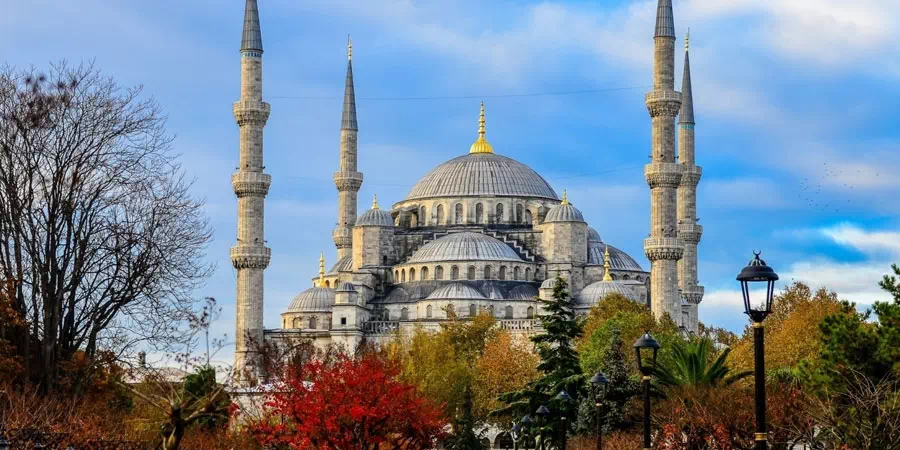
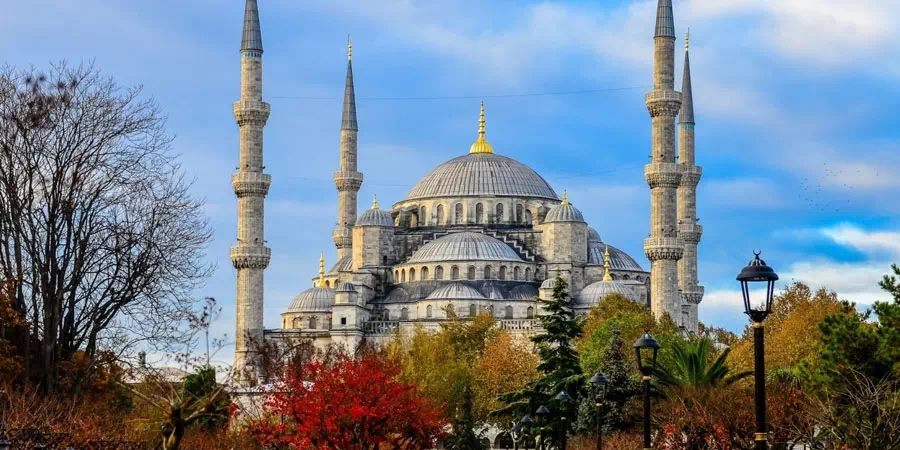
The Blue Mosque (Called Sultanahmet Camii in Turkish) is an historical mosque in Istanbul. The mosque is known as the Blue Mosque because of blue tiles surrounding the walls of interior design. Mosque was built between 1609 and 1616 years, during the rule of Ahmed I. just like many other mosques, it also comprises a tomb of the founder, a madrasa and a hospice.Besides still used as a mosque, the Sultan Ahmed Mosque has also become a popular tourist attraction in Istanbul.
Islamic Arts Museum
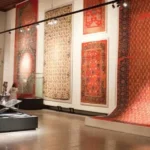
The collection from the early Islamic Period to the 20th century and the collection of countries in the vast geography of the Islamic world is gaining a distinct dimension with the works written by the Ottoman sultans to the most talented artists and calligraphers of the period for the libraries in the foundation buildings they built on their behalf.
One of the most remarkable works in the museum collection is Hz. Ali is said to belong to the Prophet. Ali Mushaf.
The Quran Leaf Damascus Documents were brought to our country in 1911 and then to our museum in 1917, one of the most important and first historical works of the Islamic Civilization.
Hagia Sophia
After the conquest of Constantinople, Hagia Sophia, the biggest temple of the city, was converted into a mosque by Fatih as a symbol of the conquest under the name of Hagia Sophia and the first Friday prayers were made here. For this reason, the churches in other cities that were later conquered were converted into mosques and the name of Hagia Sophia became a tradition.
Suleymaniye Mosque
The Suleymaniye Mosque is the largest masjid in Istanbul and regarded as its most important. It was built on the order of Sulayman the Magnificent by the great architect Sinan, both are buried within the complex. Construction work began in 1550 CE and was finished in 1558 CE.
Other Islamic Places in Istanbul
- Tomb of Eyup El Ensari (RA)
- Sultan Ahmed Mosque
- Tomb of Eyup El Ensari (RA)
- Tomb of Hz. Ebu’d Derda
- Tomb of Hz. Ka’b
- Tomb of Hz. Ebû Şeybe el-Hudri
- Tomb of Hz. Ahmed el-Ensâri
- Tomb of Hz. Muhammed el-Ensâri Visiting
- Tomb of Hz. Câbir bin Abdullah el-Ensâri
- Tomb of Hz. Ebû Zer el-Gıfârî
- Tomb of Hz. Hafir
- Tomb of Hz. Abdullah el-Hudri
- Tomb of Hz. Şu’be
- Tomb of Hz. Ebû Saîd el-Hudri
- Tomb of Hz. Câfer bin Abdullah el-Ensâri
- Tomb of Hz. Abdullah el-Ensâri
- Tomb of Hz. Amr bin Âs
- Tomb of Hz. Süfyân bin Uyeyne
- Tomb of Hz. Abdurrahman eş-Şâmi
- Tomb of Hz.Abdullah El-Ensâri
Plan Your Visit with Acetes Travel
Reading about Islamic Heritage in Istanbul? See how Acetes Travel can make it part of your Istanbul itinerary — book direct, free cancellation, 24/7 WhatsApp support.
Explore the Bosphorus Sunset Cruise →